
How to Build Engagement During the World Cup

The FIFA World Cup creates a unique opportunity for organisations of all kinds to engage their audiences - whether that’s customers, users, viewers or internal staff teams.
The challenge isn’t attention. It’s maintaining engagement across a tournament that runs for several weeks, with matches happening almost every day. Most campaigns deliver a spike of interest at the start, but far fewer create a reason for people to keep coming back.
The key is to align engagement with how people actually follow a tournament. Behaviour tends to follow a consistent pattern: build-up before matches, live interest during games, and then a surge of activity immediately afterwards. On Superbru, for example, we consistently see heavy traffic during a game, and then it spikes sharply after the final whistle, as users return to check results, standings and how they compare to others.
This creates an opportunity to build World Cup engagement around the rhythm of the tournament itself, rather than just at the start. Formats that encourage match-by-match interaction give people a reason to return regularly, rather than drifting away once their initial interest fades.
World Cup Predictor games are a good example of this. By asking participants to make simple picks for each match, they create a lightweight but consistent interaction point throughout the tournament. Every game matters, and every round offers a fresh opportunity to stay involved, regardless of earlier results.
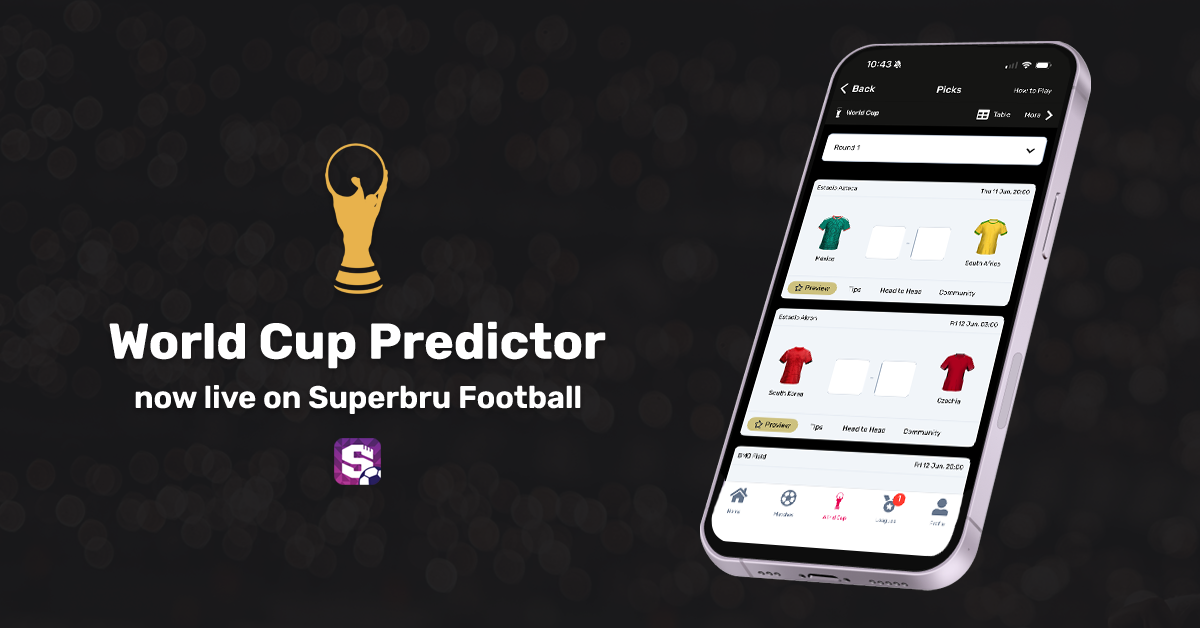
In practice, this has been applied in a number of ways on Superbru across major tournaments. Brands might run a tournament-long competition for customers, broadcasters can layer it into their coverage, and organisations often use it internally to engage staff across different locations. The format is flexible, but the underlying principle is the same: create repeat touchpoints tied to the matches themselves.
Platforms like Superbru make this easy to implement without the need to build anything from scratch. Branded World Cup competitions can be set up quickly, with all the operational aspects of game mechanics, scoring and support handled centrally.
The result is a more sustained form of engagement: participants return regularly, spend more time interacting, and are more likely to remain involved throughout the tournament. It also creates opportunities for consented data collection and more meaningful sponsorship activation.
With the 2026 World Cup approaching, many organisations are starting to think about how to make the most of the opportunity. If you’re exploring ways to drive deeper, more sustained engagement, it’s worth considering formats that work with the natural rhythm of the tournament, and give people a reason to return throughout.
If you’d like to discuss ideas or options, feel free to get in touch.
The challenge isn’t attention. It’s maintaining engagement across a tournament that runs for several weeks, with matches happening almost every day. Most campaigns deliver a spike of interest at the start, but far fewer create a reason for people to keep coming back.
Why Sustained Engagement Is the Real Opportunity at the World Cup
A common example is the traditional World Cup sweepstake - where participants are allocated or choose a team before the tournament begins. It’s simple and familiar, and works well as a one-off moment of engagement. But in practice, it offers limited ongoing interaction. Most participants are effectively out of contention early on, and there’s little reason to stay involved match-by-match.The key is to align engagement with how people actually follow a tournament. Behaviour tends to follow a consistent pattern: build-up before matches, live interest during games, and then a surge of activity immediately afterwards. On Superbru, for example, we consistently see heavy traffic during a game, and then it spikes sharply after the final whistle, as users return to check results, standings and how they compare to others.
This creates an opportunity to build World Cup engagement around the rhythm of the tournament itself, rather than just at the start. Formats that encourage match-by-match interaction give people a reason to return regularly, rather than drifting away once their initial interest fades.
World Cup Predictor games are a good example of this. By asking participants to make simple picks for each match, they create a lightweight but consistent interaction point throughout the tournament. Every game matters, and every round offers a fresh opportunity to stay involved, regardless of earlier results.
In practice, this has been applied in a number of ways on Superbru across major tournaments. Brands might run a tournament-long competition for customers, broadcasters can layer it into their coverage, and organisations often use it internally to engage staff across different locations. The format is flexible, but the underlying principle is the same: create repeat touchpoints tied to the matches themselves.
Platforms like Superbru make this easy to implement without the need to build anything from scratch. Branded World Cup competitions can be set up quickly, with all the operational aspects of game mechanics, scoring and support handled centrally.
The result is a more sustained form of engagement: participants return regularly, spend more time interacting, and are more likely to remain involved throughout the tournament. It also creates opportunities for consented data collection and more meaningful sponsorship activation.
With the 2026 World Cup approaching, many organisations are starting to think about how to make the most of the opportunity. If you’re exploring ways to drive deeper, more sustained engagement, it’s worth considering formats that work with the natural rhythm of the tournament, and give people a reason to return throughout.
If you’d like to discuss ideas or options, feel free to get in touch.
 Superbru on X
I know its a lot more admin but the FIFA WC is only once every 4 years, makig it a special event.Even an old 4 band Odds-based would do, like we had for Qatar 2022. Surely you can resurrect that? Even if only perhaps only after the group stages.
The 'Office Sweepstake' analogy brings back memories of the least interested in football often winning or worst still the big bucks boss!
Can a sponsor come onboard to cover the extra admin of a FULL XI-a-side Football Fantasy with PRIZES?!
Cheers J-P